
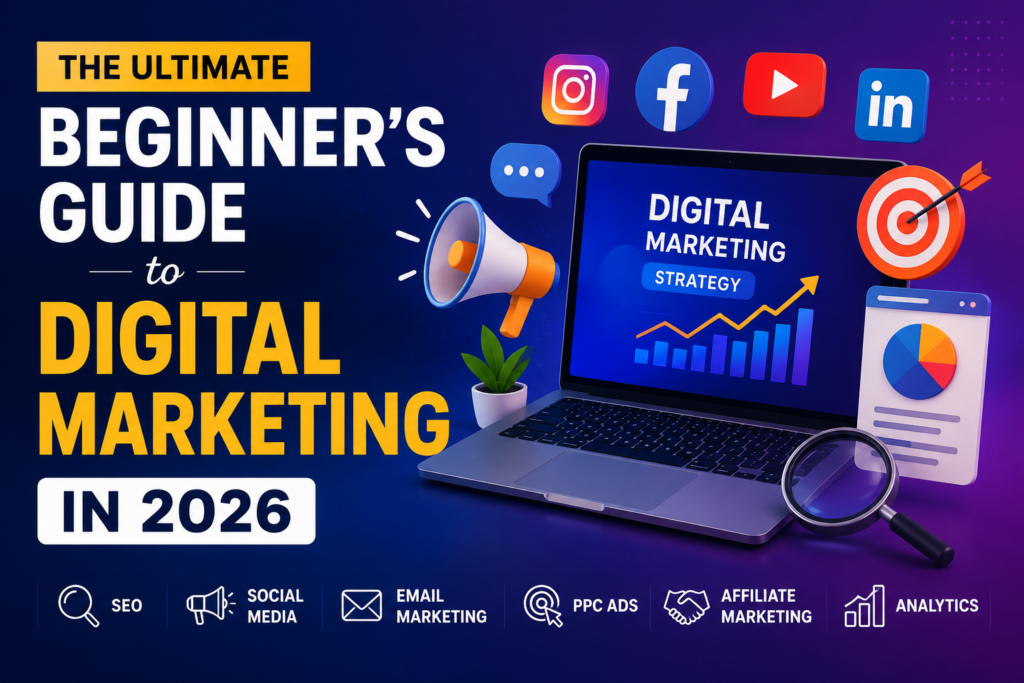
Digital marketing has become one of the most powerful ways for businesses to connect with customers, promote products, and increase sales. In 2026, the digital landscape continues to evolve with new technologies, artificial intelligence, and changing consumer behavior. Whether you’re a business owner, freelancer, student, or aspiring marketer, understanding the basics of digital marketing is essential for long-term success.
This beginner’s guide explains everything you need to know about digital marketing, including its main channels, benefits, strategies, and the latest trends shaping the industry.
What Is Digital Marketing?
Digital marketing is the process of promoting products, services, or brands using digital channels such as search engines, websites, social media, email, and online advertising. Unlike traditional marketing, digital marketing allows businesses to reach a global audience, track campaign performance in real time, and optimize strategies for better results.
Today, millions of businesses rely on digital marketing because consumers spend more time online than ever before.
Why Digital Marketing Is Important
Digital marketing offers several advantages over traditional advertising.
Some of the biggest benefits include:
- Reaching a larger audience worldwide
- Lower marketing costs
- Better customer targeting
- Measurable campaign results
- Increased brand awareness
- Higher conversion rates
- Improved customer engagement
- Better return on investment (ROI)
Businesses that invest in digital marketing often experience faster growth and stronger customer relationships.
Main Types of Digital Marketing
1. Search Engine Optimization (SEO)
SEO focuses on improving your website’s visibility in search engine results like Google. By optimizing content, keywords, page speed, and user experience, businesses can attract free organic traffic.
Benefits of SEO include:
- Long-term traffic growth
- Higher search rankings
- Increased website authority
- Better user experience
2. Content Marketing
Content marketing involves creating valuable content that educates, informs, or entertains your audience.
Popular content formats include:
- Blog posts
- Videos
- Infographics
- Podcasts
- Case studies
- E-books
High-quality content builds trust and encourages customers to engage with your brand.
3. Social Media Marketing
Social media platforms help businesses connect directly with customers.
Popular platforms include:
- TikTok
- X (Twitter)
Businesses use social media to build communities, share content, advertise products, and improve customer relationships.
4. Email Marketing
Email remains one of the highest-performing digital marketing channels.
Businesses use email to:
- Send newsletters
- Promote products
- Share updates
- Offer discounts
- Build customer loyalty
Personalized email campaigns often produce excellent conversion rates.
5. Pay-Per-Click (PPC) Advertising
PPC allows businesses to display advertisements on search engines and social media platforms while paying only when someone clicks the ad.
Popular advertising platforms include:
- Google Ads
- Facebook Ads
- Instagram Ads
- LinkedIn Ads
PPC provides fast results and precise audience targeting.
6. Affiliate Marketing
Affiliate marketing allows individuals or businesses to earn commissions by promoting products or services from other companies.
Affiliates earn income whenever someone purchases through their referral links, making it one of the most popular online business models today.
7. Influencer Marketing
Influencers promote products to their loyal audiences through authentic recommendations.
This strategy helps businesses:
- Increase brand awareness
- Reach niche audiences
- Build credibility
- Generate sales
Micro-influencers often produce higher engagement than celebrities.
Creating a Digital Marketing Strategy
A successful strategy starts with careful planning.
Define Your Goals
Examples include:
- Increase website traffic
- Generate leads
- Improve sales
- Grow social media followers
- Build brand awareness
Setting measurable goals helps evaluate campaign performance.
Know Your Audience
Research your ideal customers by understanding:
- Age
- Interests
- Location
- Online behavior
- Purchasing habits
The better you know your audience, the more effective your campaigns become.
Create Valuable Content
Content should solve problems, answer questions, or educate readers.
Examples include:
- Tutorials
- Industry news
- Product guides
- Customer stories
- How-to articles
Consistently publishing quality content improves trust and SEO performance.
Essential Digital Marketing Tools
Many professionals use specialized tools to improve efficiency.
Popular tools include:
- Google Analytics
- Google Search Console
- Canva
- Mailchimp
- Ahrefs
- SEMrush
- Buffer
- Hootsuite
These platforms help analyze traffic, manage content, schedule posts, and monitor campaign performance.
Common Beginner Mistakes
Many beginners make mistakes that limit their success.
Avoid these common errors:
- Ignoring SEO
- Posting inconsistent content
- Targeting the wrong audience
- Focusing only on sales
- Not tracking performance
- Using poor-quality visuals
- Giving up too early
Successful digital marketing requires patience and continuous improvement.
Digital Marketing Trends in 2026
The industry continues to change rapidly.
Important trends include:
- Artificial Intelligence (AI)
- Voice search optimization
- Personalized customer experiences
- Interactive video content
- Social commerce
- Short-form videos
- Marketing automation
- Privacy-focused advertising
Businesses that adapt to these trends remain competitive.
Tips for Beginners
If you’re just starting your digital marketing journey:
- Learn one marketing channel at a time.
- Build a simple website or blog.
- Practice writing SEO-friendly content.
- Create consistent social media posts.
- Learn basic analytics.
- Stay updated with industry news.
- Test different strategies and measure results.
- Never stop learning.
Experience gained through practice is the fastest way to improve your marketing skills.
Conclusion
Digital marketing in 2026 offers endless opportunities for businesses and individuals willing to learn and adapt. From SEO and content marketing to social media, email campaigns, and affiliate marketing, every strategy plays a valuable role in growing an online presence.
For beginners, the key is to start with the fundamentals, remain consistent, focus on delivering value, and continuously improve based on data. As technology evolves, businesses that embrace innovation and customer-focused marketing will enjoy long-term success in the digital world.